
Precision Medicine Transformed Oncology —It’s Time to Do the Same for Sepsis
It’s time we reignite treatment development for sepsis and other immune-mediated conditions that strike when patients are most vulnerable.
It’s time we reignite treatment development for sepsis and other immune-mediated conditions that strike when patients are most vulnerable.

Groundbreaking new therapies have exciting potential to treat and cure diseases while minimizing burden on patients; however, they create major clinical, operational and financial implications that must be planned for years in advance.

Healthcare decision-makers, especially at pharmaceutical companies, must prioritize patient input. Data collected from social media listening is a significant step in the right direction.

A new UPMC report found that while most health systems now offer precision medicine programs, many still face challenges scaling them due to reimbursement, data integration and patient engagement issues. Health system leaders say the field’s future depends on embedding genomics into routine care, as well as proving its clinical and financial value.
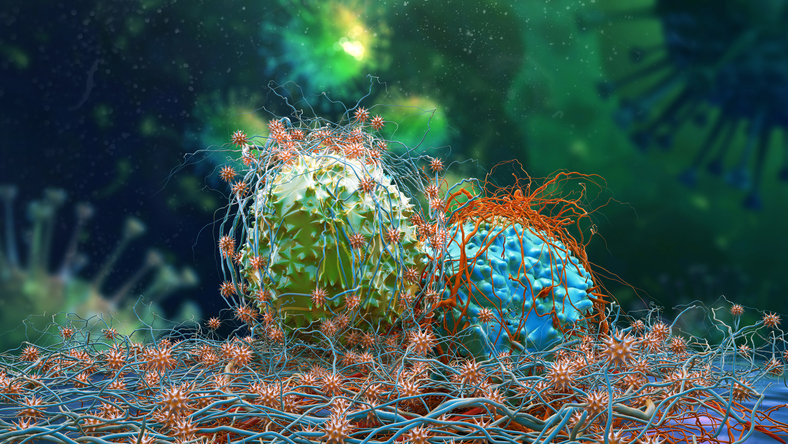
Waiv, formerly the diagnostics division of AI biotech Owkin, developed AI-enabled testing technologies that found use in clinical settings and in cancer drug research. Spinning out as an independent company enables Waiv to pursue its own growth strategy, co-founder and CEO Meriem Sefta said.

Precision medicine offers a path for healthcare to become more proactive, more personalized, and more effective for every individual with a far more sustainable cost curve.

Dr. Prajnan Das, department chair of Gastrointestinal (GI) Radiation Oncology at MD Anderson Cancer Center, talks about how precision medicine has evolved and how AI may actually be the technology that supercharges the conversion of the knowledge about human biology to personalized treatments that work.

We are taking a look at how health insurers are using AI, defining success, and managing cybersecurity risks. Give us your opinions by completing our brief, anonymous survey.
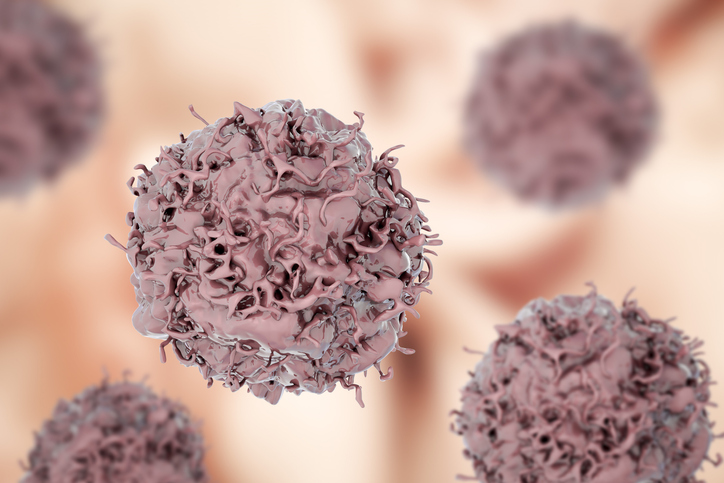
Caris Life Sciences applies AI and machine learning to patient samples to detect cancer and as a companion diagnostic guiding the use of targeted cancer therapies. As a commercial-stage company, Caris’s upsized public markets debut is an outlier amid the continuing IPO freeze for clinical-stage biotechs developing new drugs.
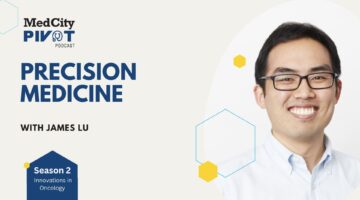
In this episode of the MedCity Pivot Podcast, editor-in-chief Arundhati Parmar, speaks with Helix CEO James Lu about his company and how far precision medicine has come.
Alzheon hoped testing its drug in a genetically defined subgroup of Alzheimer’s disease patients would succeed, overcoming earlier clinical trial failures. Instead, preliminary results show the pill failed to outdistance a placebo.

Robert Califf addressed a range of issues, including AI, lack of nutrition resources at the FDA and how he evaluates the progress of precision medicine at the Precision Medicine World Conference in Silicon Valley.

What if health plans could identify member decline before an avoidable hospitalization occurs? Real-time clinical visibility into long-stay SNF members uncovers risk earlier and drives better outcomes.

With technology advancements specifically in the field of AI, there is a clear line of sight in making it mainstream. Here are some of the ways AI is helping to accelerate the adoption of PM.

Reacting to an adverse medical event after it has progressed to causing the patient to seek medical help is the least opportune time to address the underlying disease.
Alto Neuroscience will apply the IPO proceeds toward clinical tests of its psychiatric drugs in patients who exhibit certain biomarkers. The company's two most advanced programs are depression drugs in mid-stage development.

The more pharma companies do to become service providers in the personalized medicine era, the more they’ll succeed and the more lives they’ll help to save.

Cancer treatment is one area that could benefit significantly from AI, as it can aid in early detection, precise diagnosis, and personalized treatment plans.